10 – 30 mm
3
layers
Standard product range
Laminated from pure bamboo strips — no filler, no plastic core. For worktops, tabletops, treads and architectural bespoke work where both the natural look and the structural strength of bamboo are required.

Bamboo grows up to a metre a day and is ready to harvest within 3 to 5 years — twenty times faster than tropical hardwood. By laminating the strips under high pressure, a continuous, solid panel is created that is technically in the same class as oak and iroko: dense, hard, dimensionally stable and without filler or plastic core.
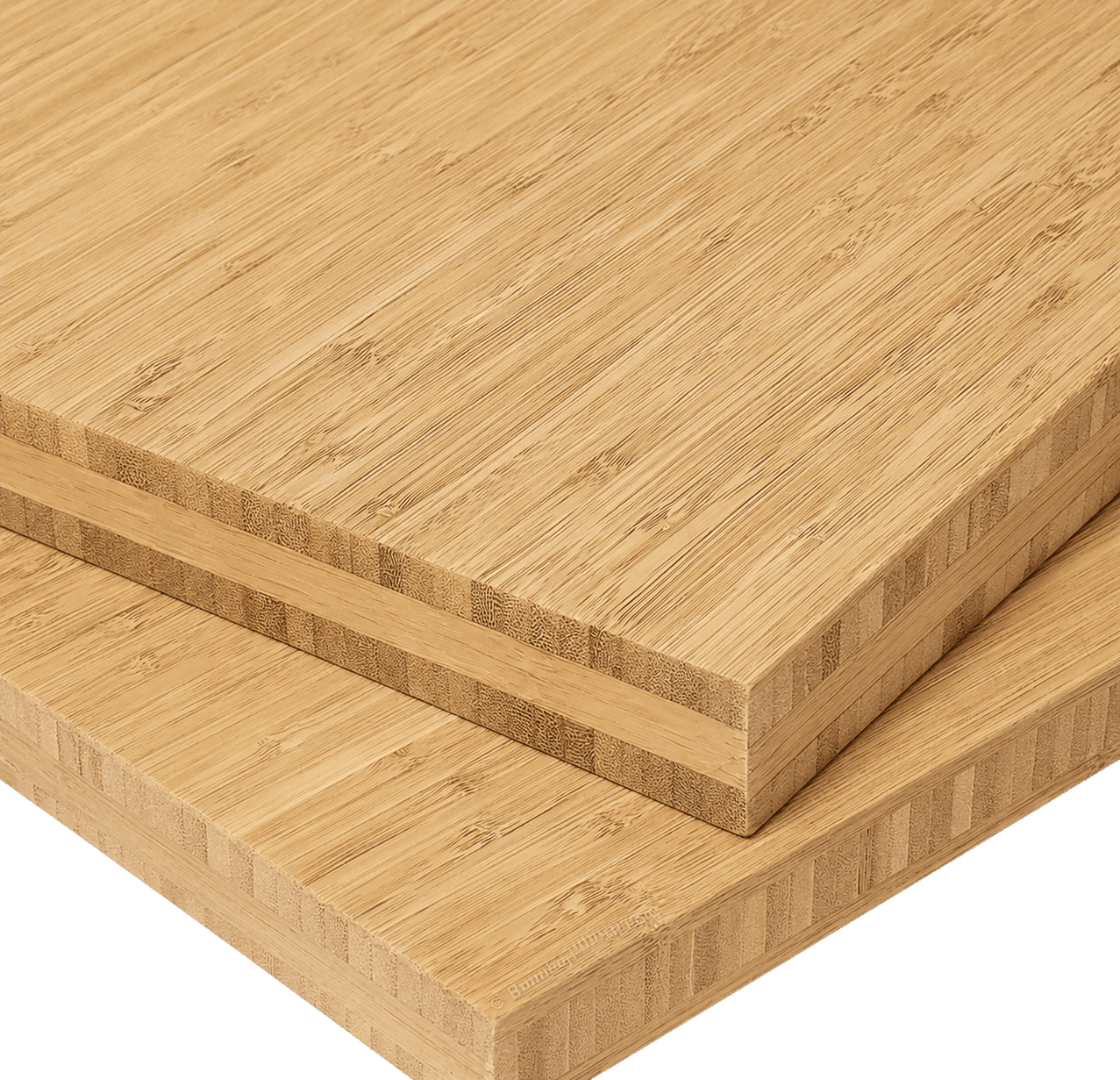
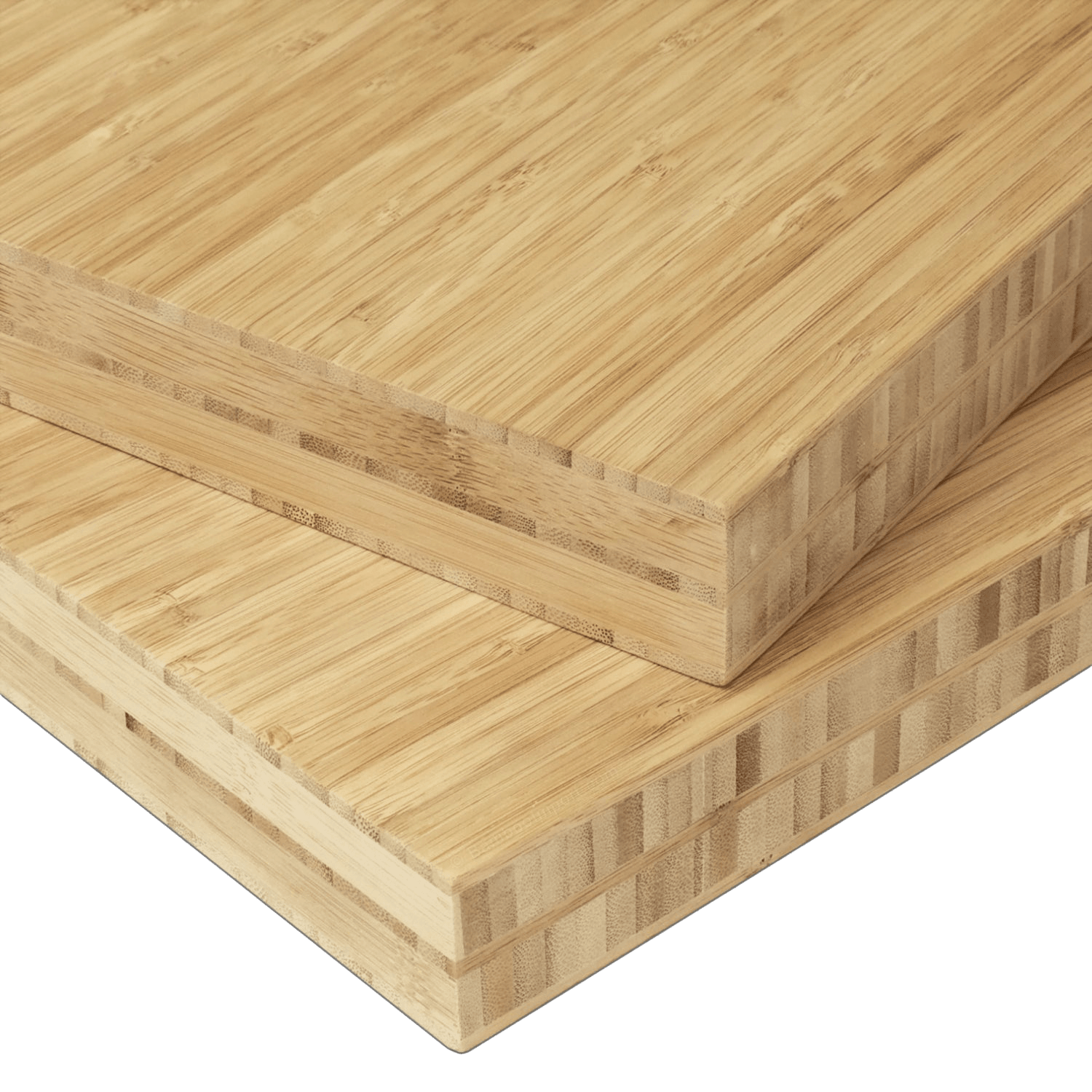
Every panel is unique. The fibre structure of the bamboo stalk is clearly visible in the surface — and even more explicitly in the side view and the end grain. No two panels are ever identical; the natural variation is part of the character.
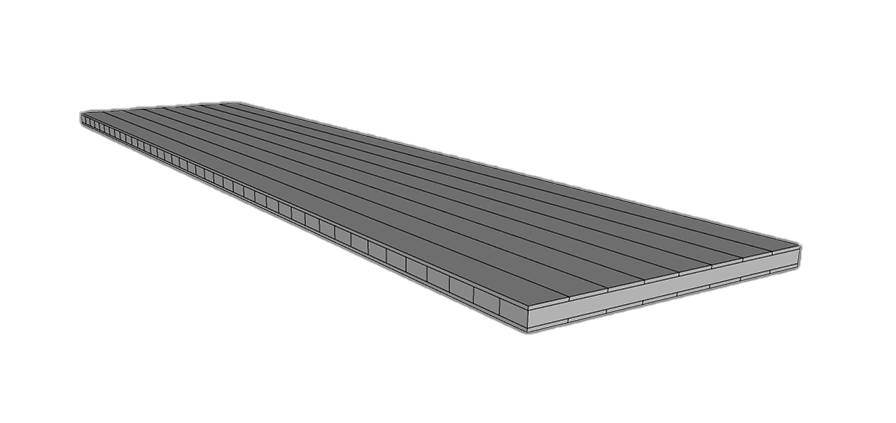
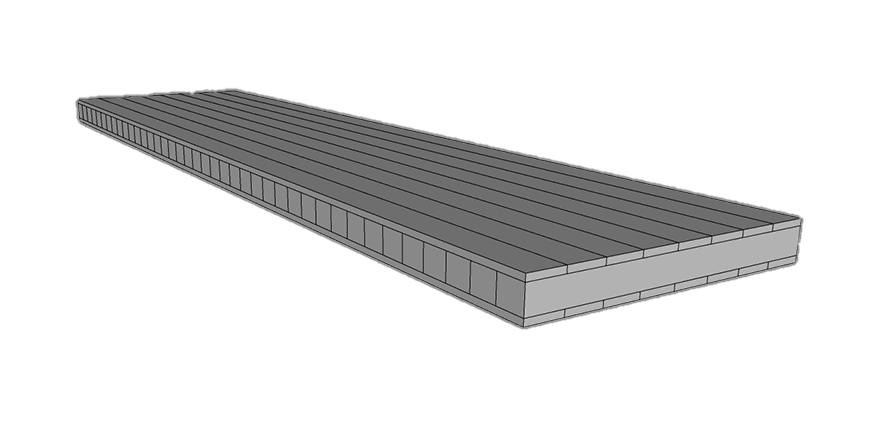
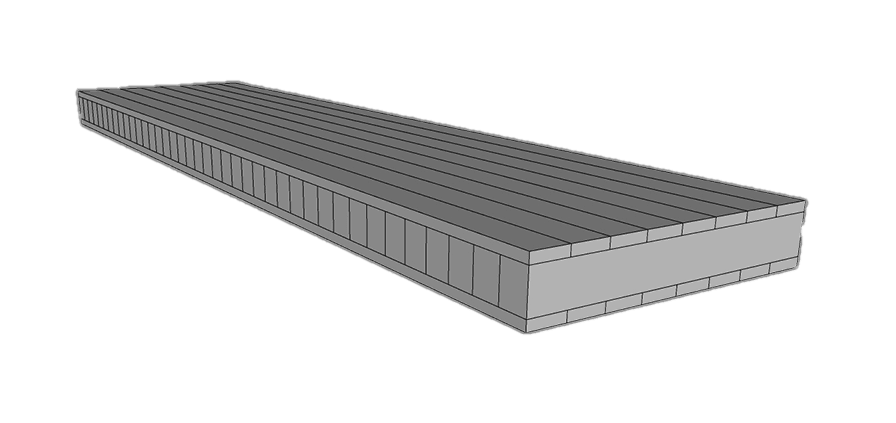
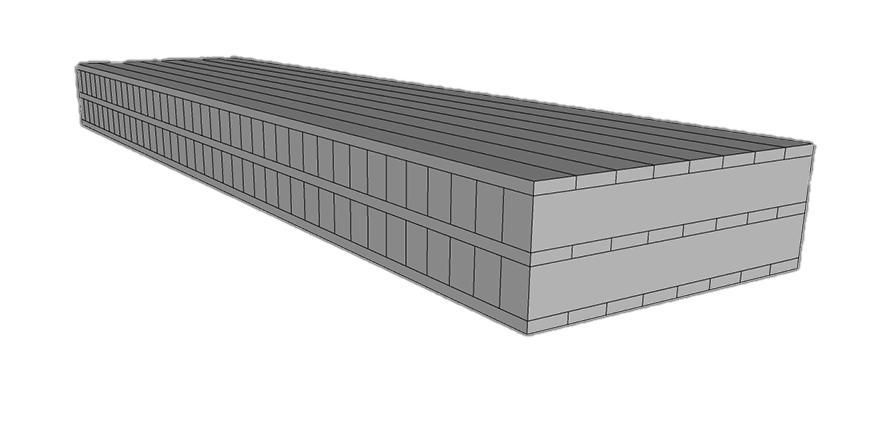
A solid bamboo panel is built up from thin, glued strips of pure bamboo — no MDF core, no OSB filler, no veneer layer over a wood-based base. The entire panel consists of bamboo, laminated in 3 or 5 layers into a continuous, robust material that can be worked much like solid hardwood.
The number of layers is tied to the panel thickness. Up to and including 30 mm we use a 3-ply build-up — sufficiently stable for worktops and standard interiors. From 40 mm, production allows 5-ply for maximum dimensional stability.
The pressing direction determines the visual pattern as well as the visible hardness. Plain pressed shows wide, flowing strips. Side pressed sets the bamboo strips on their edge and gives a fine, dense play of lines with visible nodes — the characteristic bamboo look.
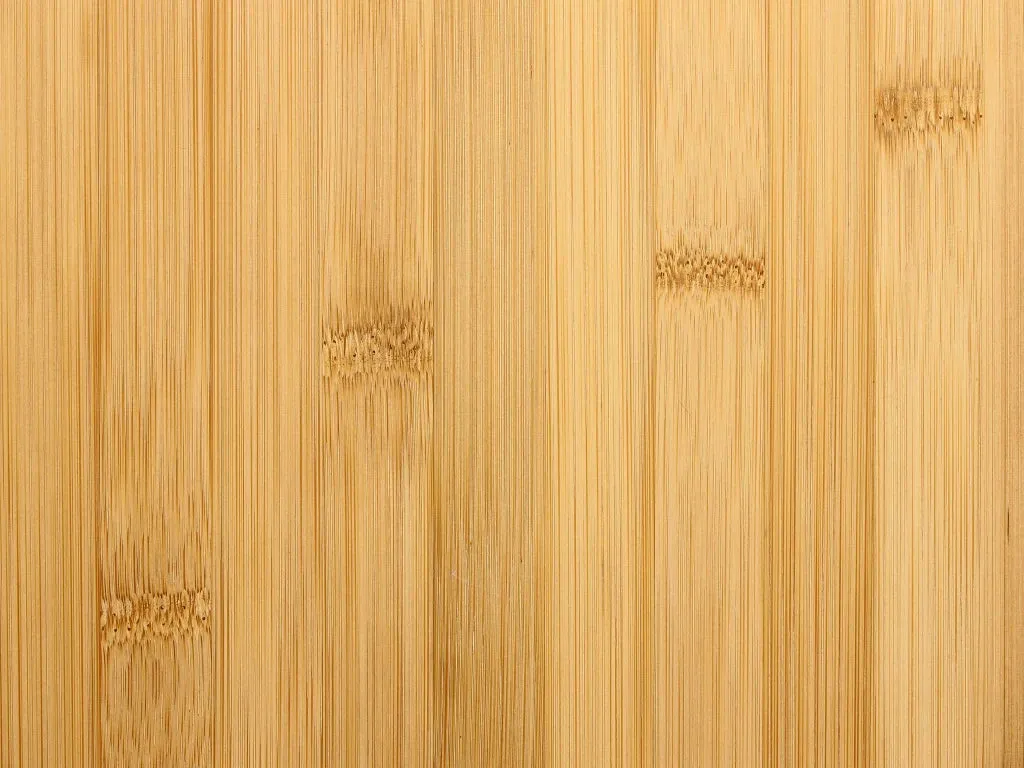
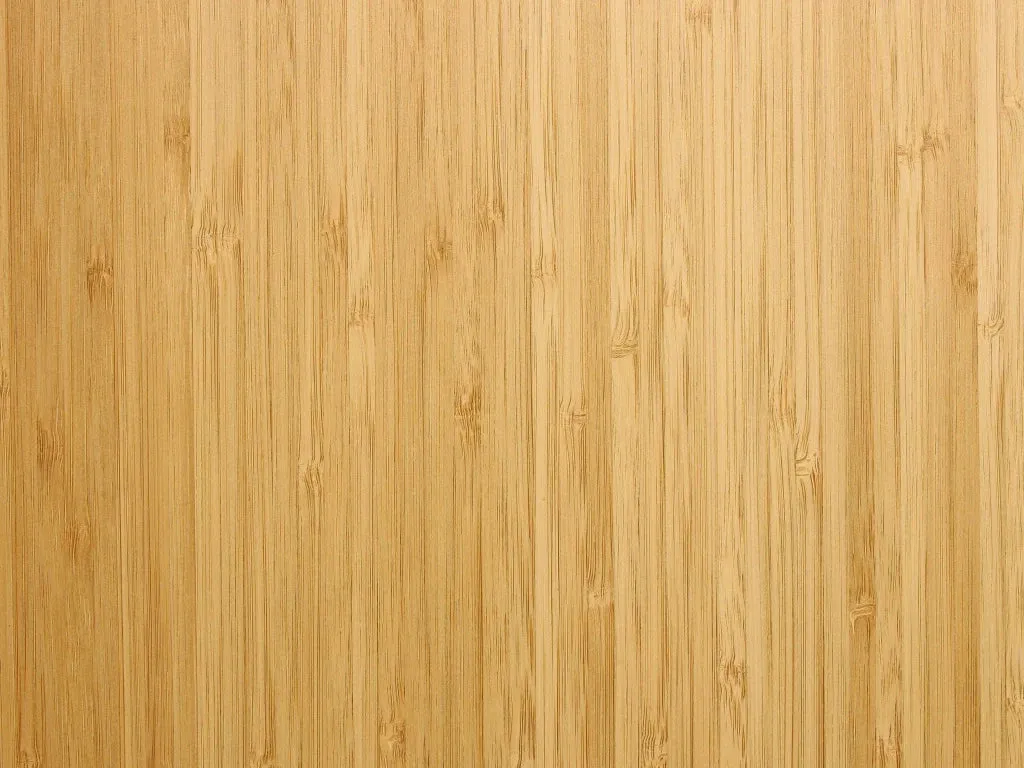
The characteristic pattern of solid bamboo panels only truly becomes visible in the end grain (end face) and in the side view of the panel. Both patterns arise naturally from the fibre structure of bamboo — no two panels are identical.
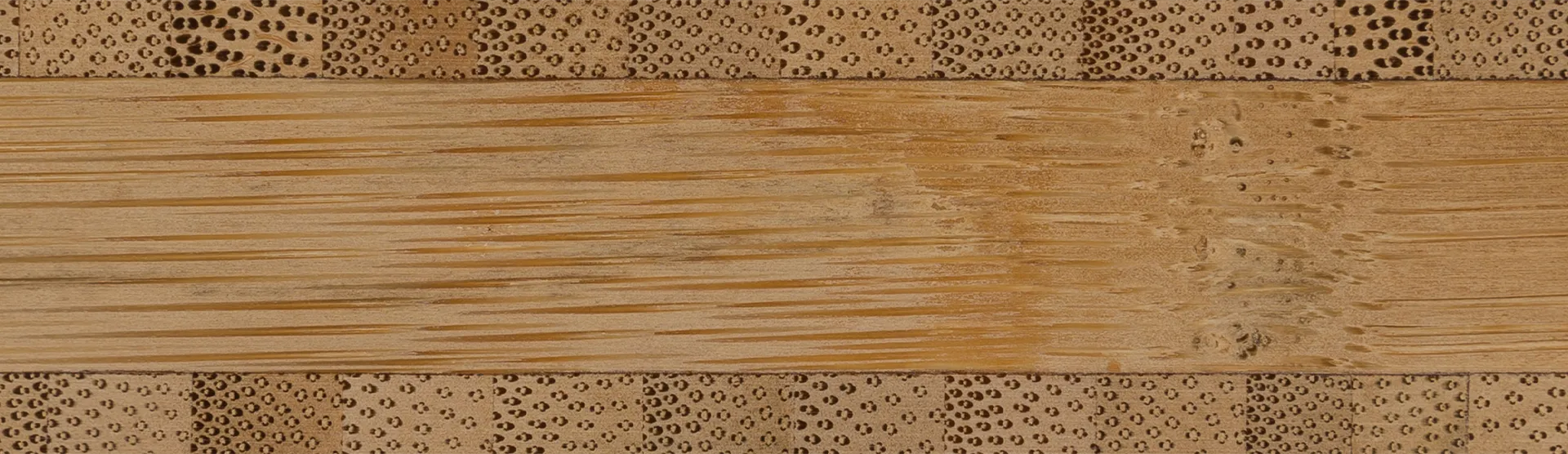
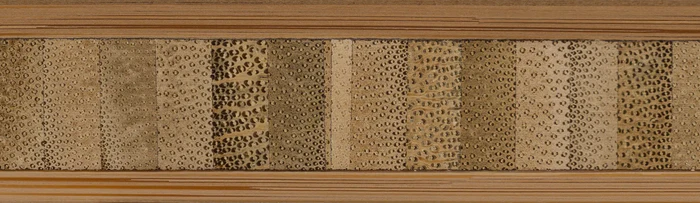
Our standard product line is supplied in Licht caramel — a warm, honey-brown tone created by thermal treatment of the bamboo strips before lamination. No paint, no pigment — the colour runs through the entire material and therefore does not wear off with use or sanding.
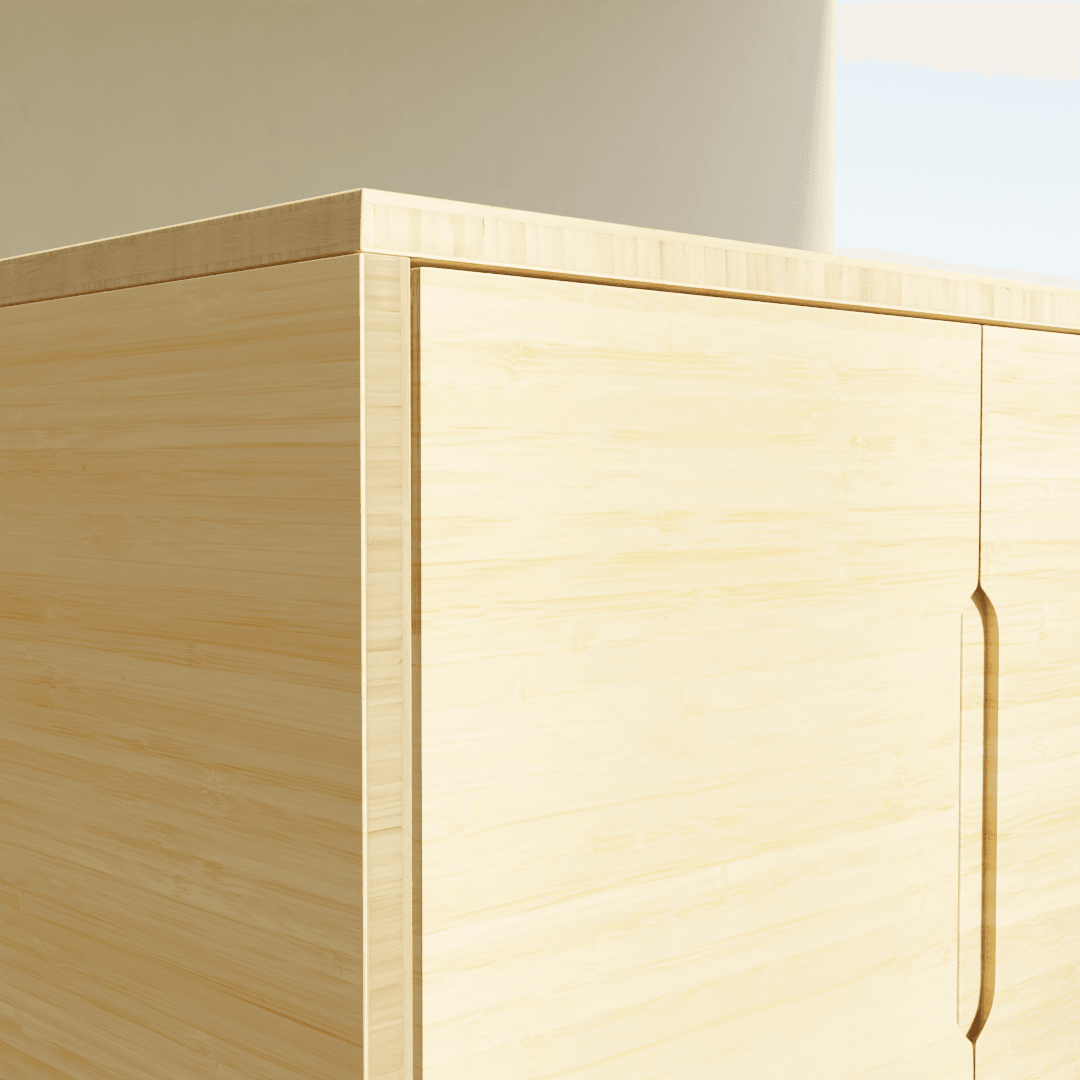
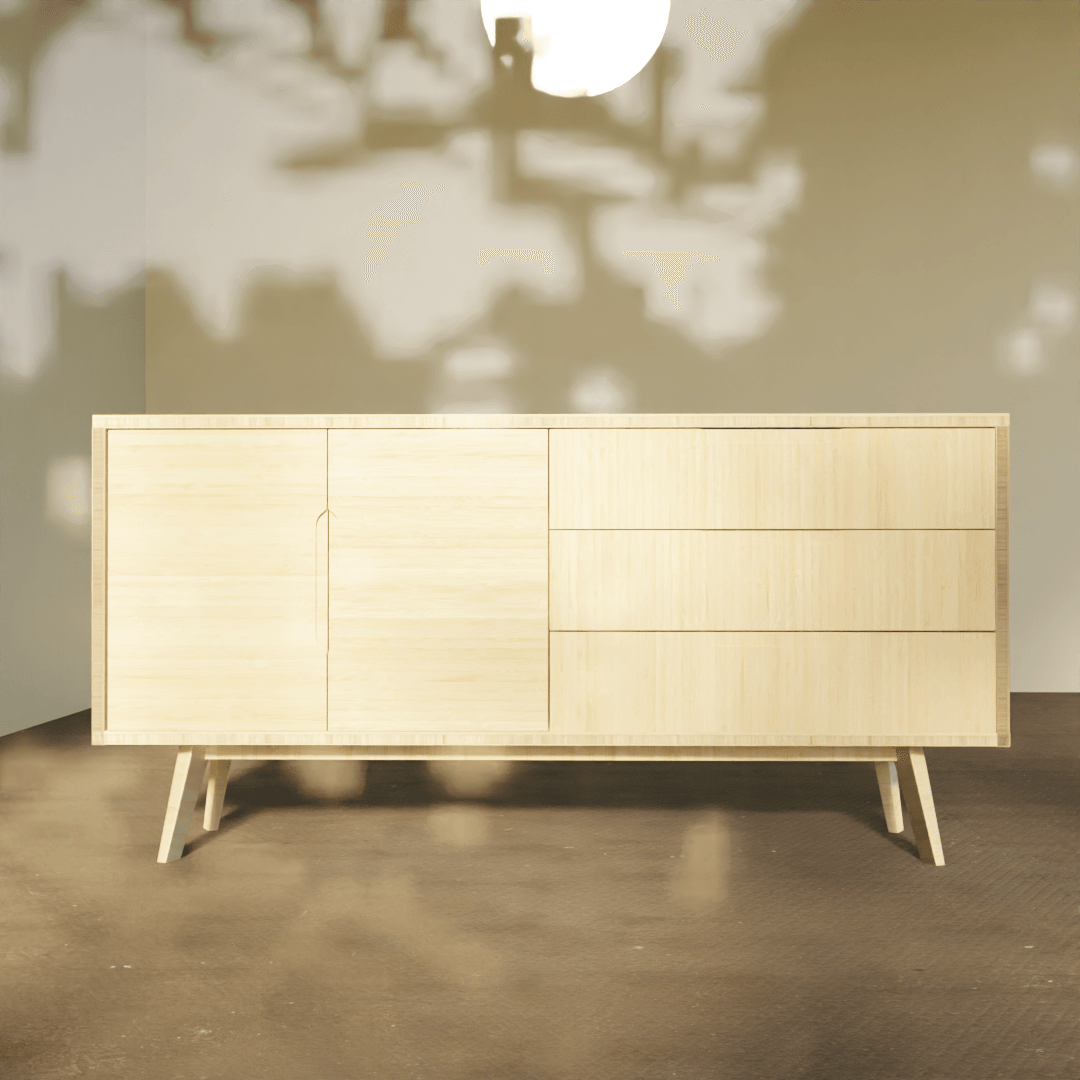
Four real photos of the standard product range — this is how the panels look on delivery. The layer build-up (3-ply up to 30 mm, 5-ply from 40 mm) is recognisable by the visible bands on the edge.
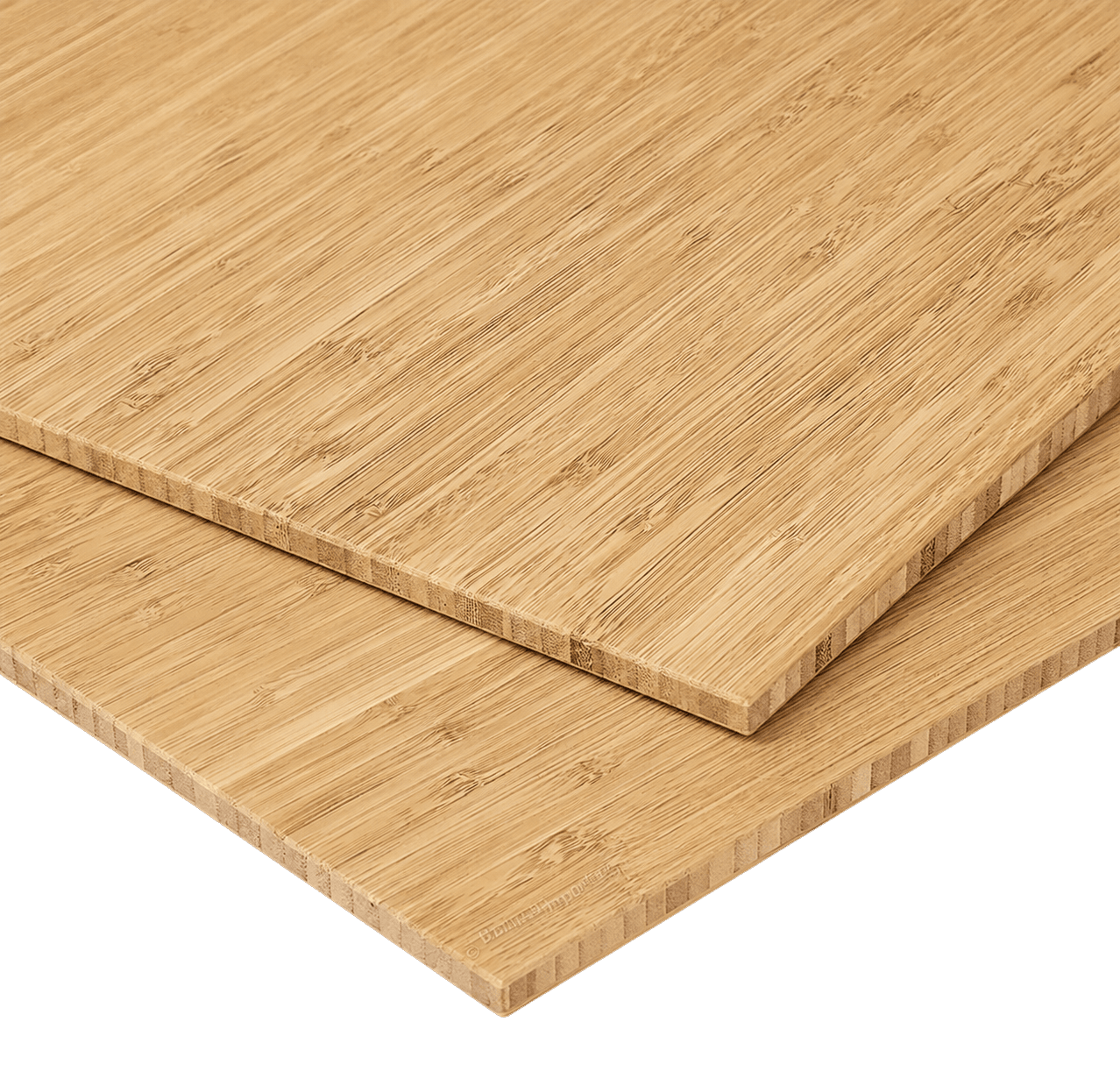
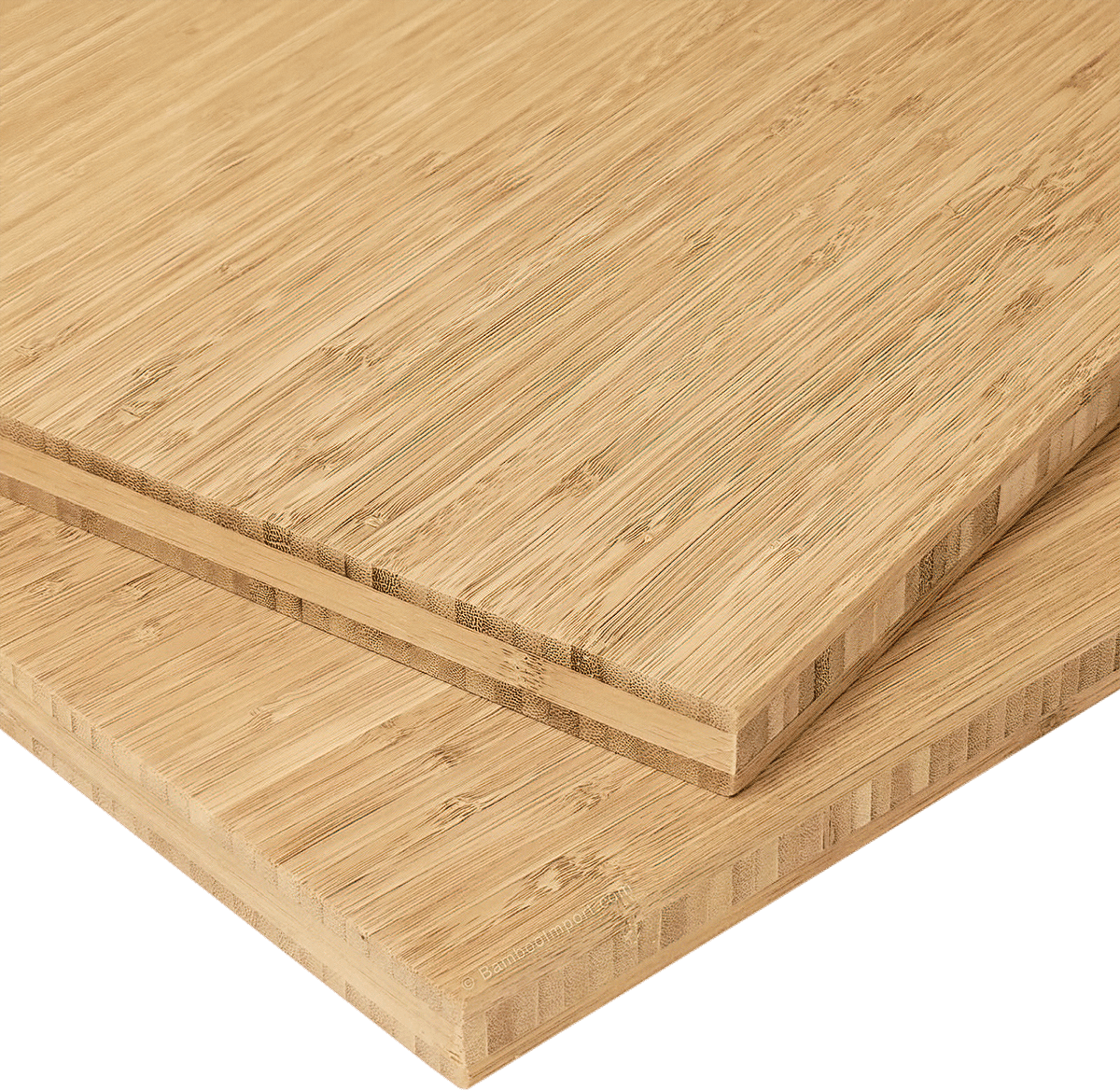
Bamboo is a grass — but laminated bamboo panels perform like a hardwood deck. The key figures (measured according to EN standards):
Our product line counts two pressing directions (Plain & Side pressed) in four thicknesses, plus a bamboo veneer for finishing existing panels.
| Product code | Type | Layers | Thickness | L × W (mm) |
|---|---|---|---|---|
| MP-PP10-3L-LC | Plain pressed | 3-ply | 10 mm | 2440 × 1220 |
| MP-PP20-3L-LC | Plain pressed | 3-ply | 20 mm | 2440 × 1220 |
| MP-PP30-3L-LC | Plain pressed | 3-ply | 30 mm | 2440 × 1220 |
| MP-PP40-5L-LC | Plain pressed | 5-ply | 40 mm | 2440 × 1220 |
| MP-SP10-3L-LC | Side pressed | 3-ply | 10 mm | 2440 × 1220 |
| MP-SP20-3L-LC | Side pressed | 3-ply | 20 mm | 2440 × 1220 |
| MP-SP30-3L-LC | Side pressed | 3-ply | 30 mm | 2440 × 1220 |
| MP-SP40-5L-LC | Side pressed | 5-ply | 40 mm | 2440 × 1220 |
| MP-BF-2500-1250-0.6 | Bamboo veneer | 1-ply | 0,6 mm | 2500 × 1250 |
Four standard thicknesses — the choice depends on the application and the desired weight per m². Tolerance on all thicknesses is < ±0,3 mm.
For projects with non-standard sizes or large series we work from 20 panels. The process:
Send us your drawing or project requirements. One working day for feedback.
Within 2 working days — including a realistic delivery time.
4 – 8 weeks for bespoke work, depending on the number of layers and size.
From the manufacturer or our European stock, directly to the construction site if desired.
The 2440 × 1220 mm standard size is deliberately chosen — it matches most CNC tables in NL and DE, so no extra cutting during production.
Solid bamboo panels are the first choice where the surface is machined — milled, chamfered, inlaid — or where the edge stays visible (stair treads, bar tops, kitchen worktops). The technical sheet sums it up: "particularly suited for scenarios where the edge remains visible".
Our customers mainly apply solid panels in these six scenarios:
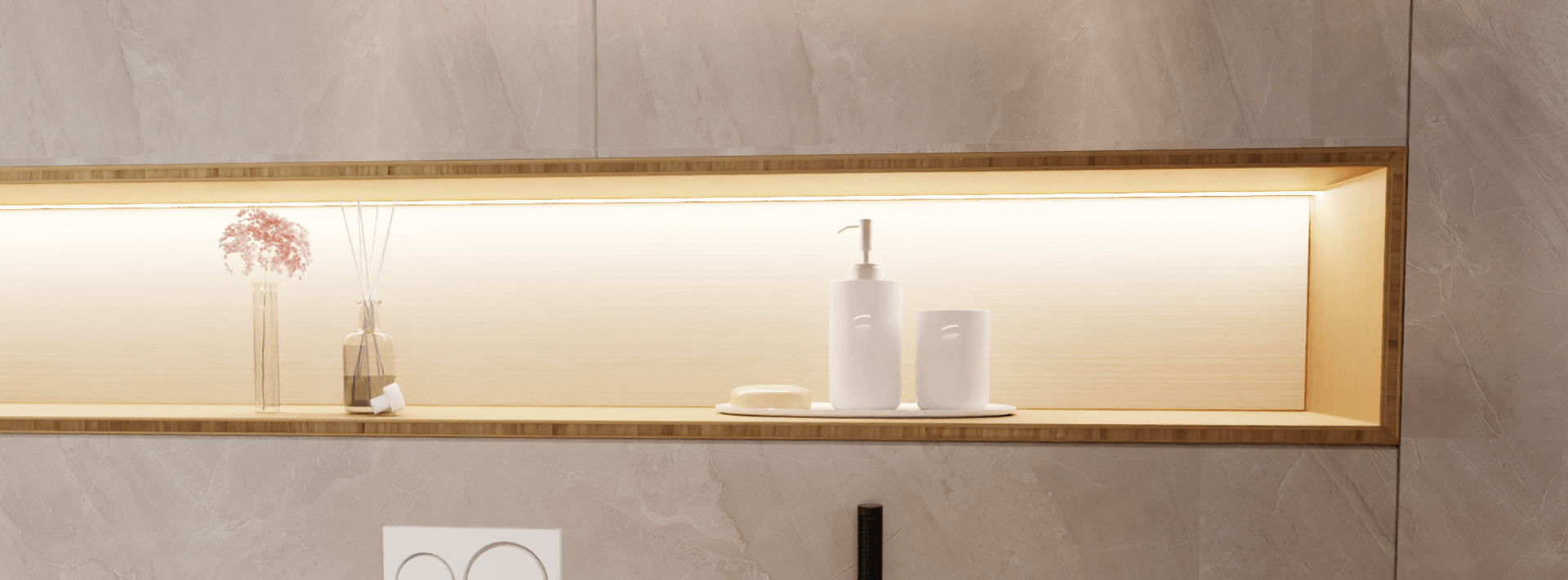
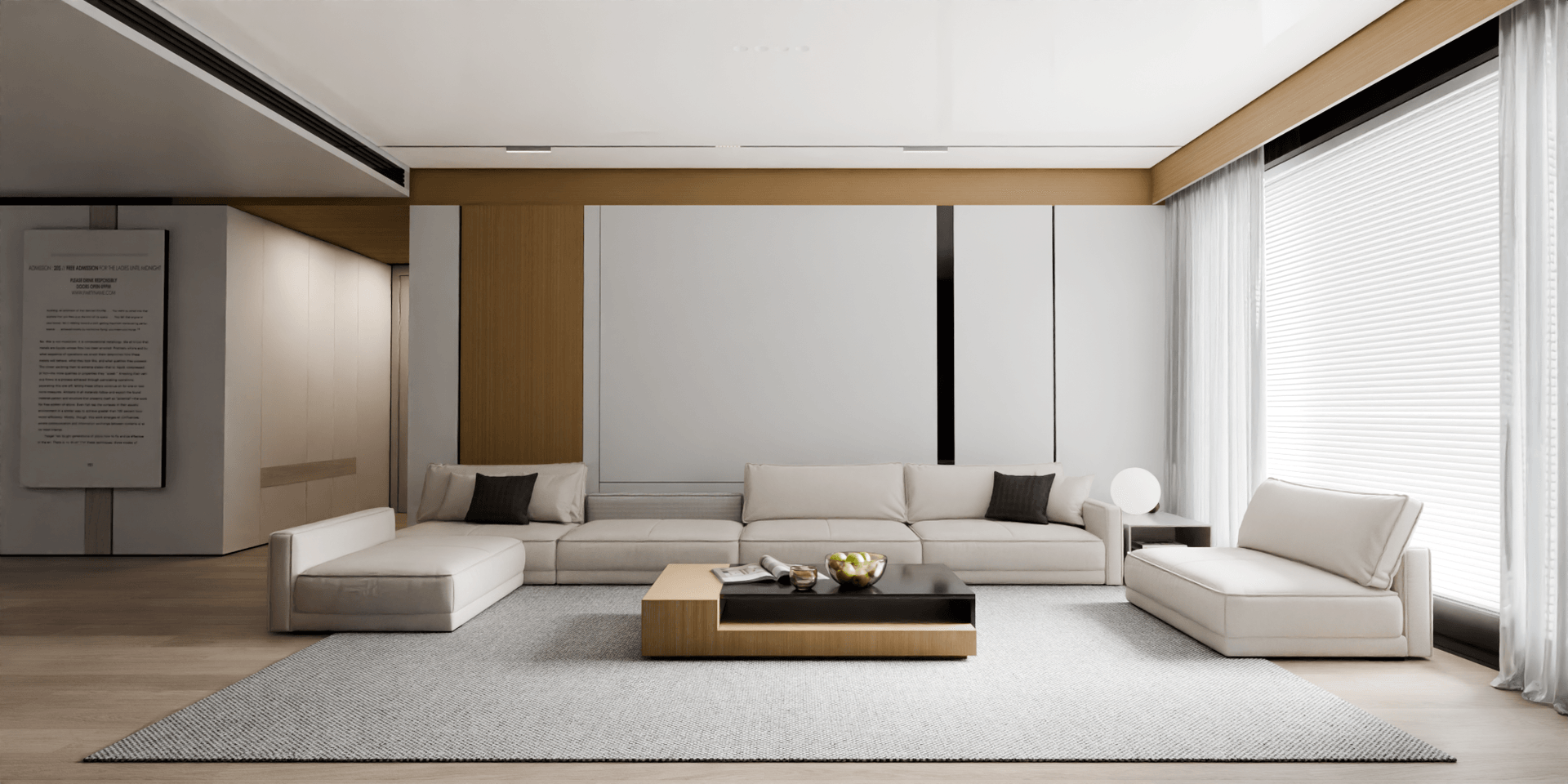
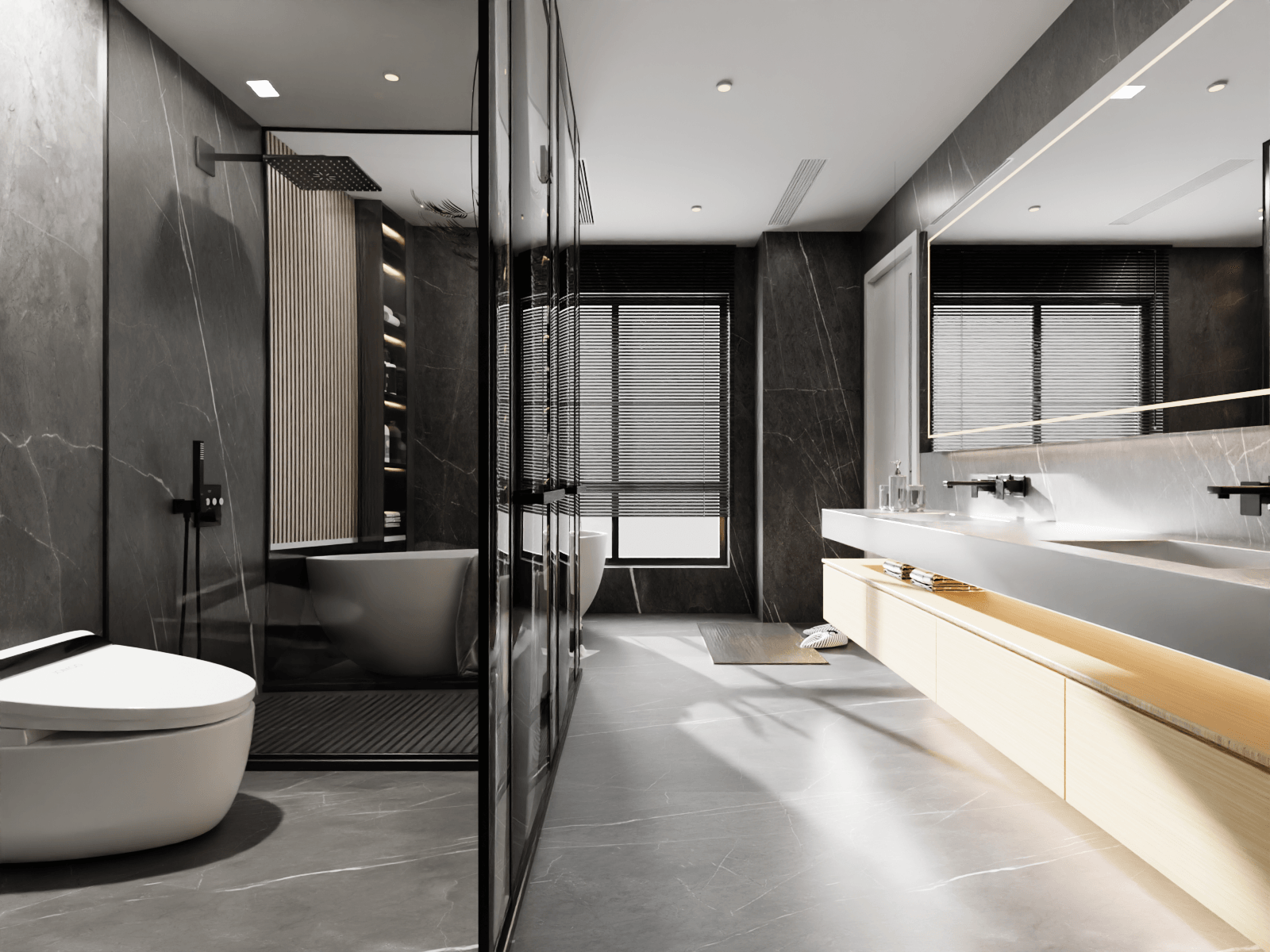
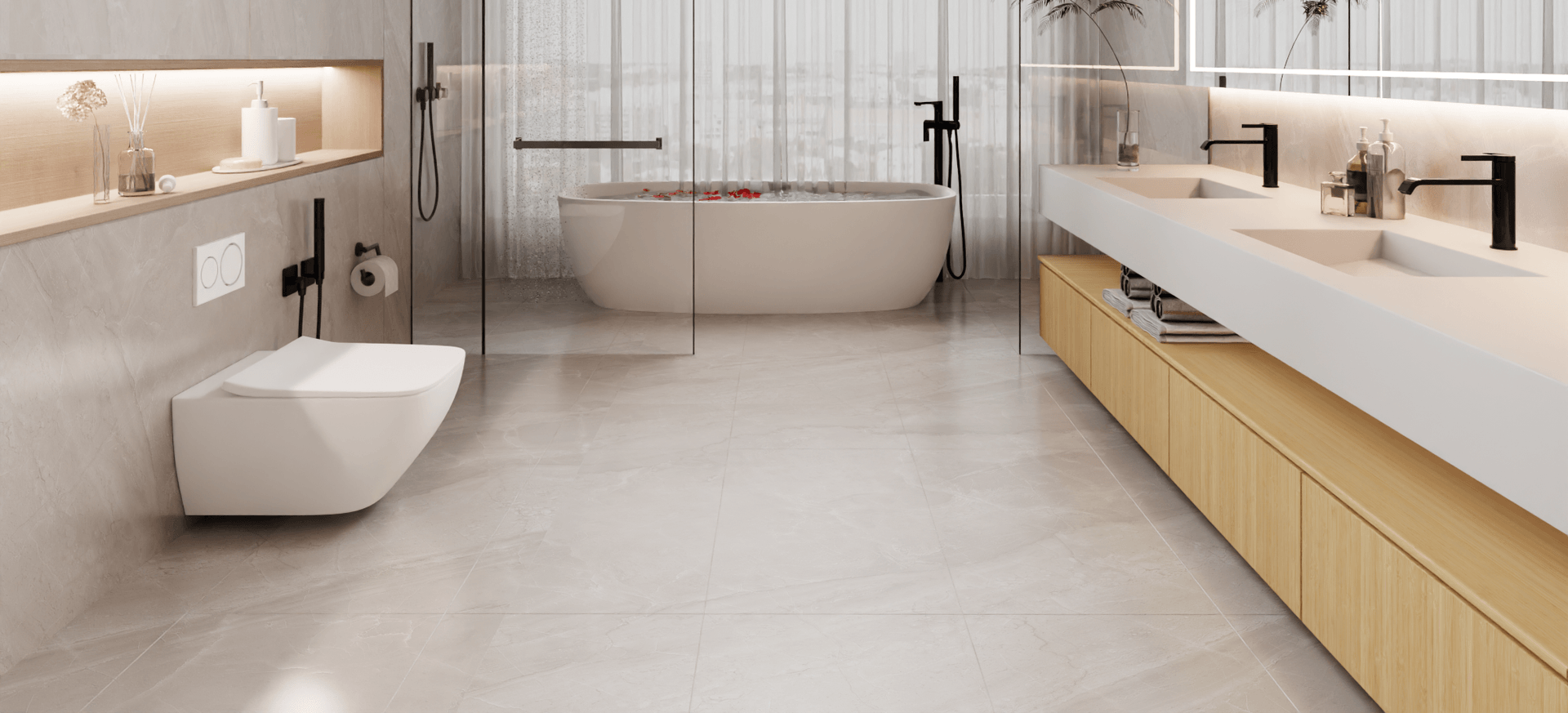
Solid bamboo panels in real interiors — from continuous kitchen worktop and cooking island to floating bathroom unit, sideboard and wall cladding. The warm Licht caramel tone and the continuous fibre image only truly come to life at full scale.
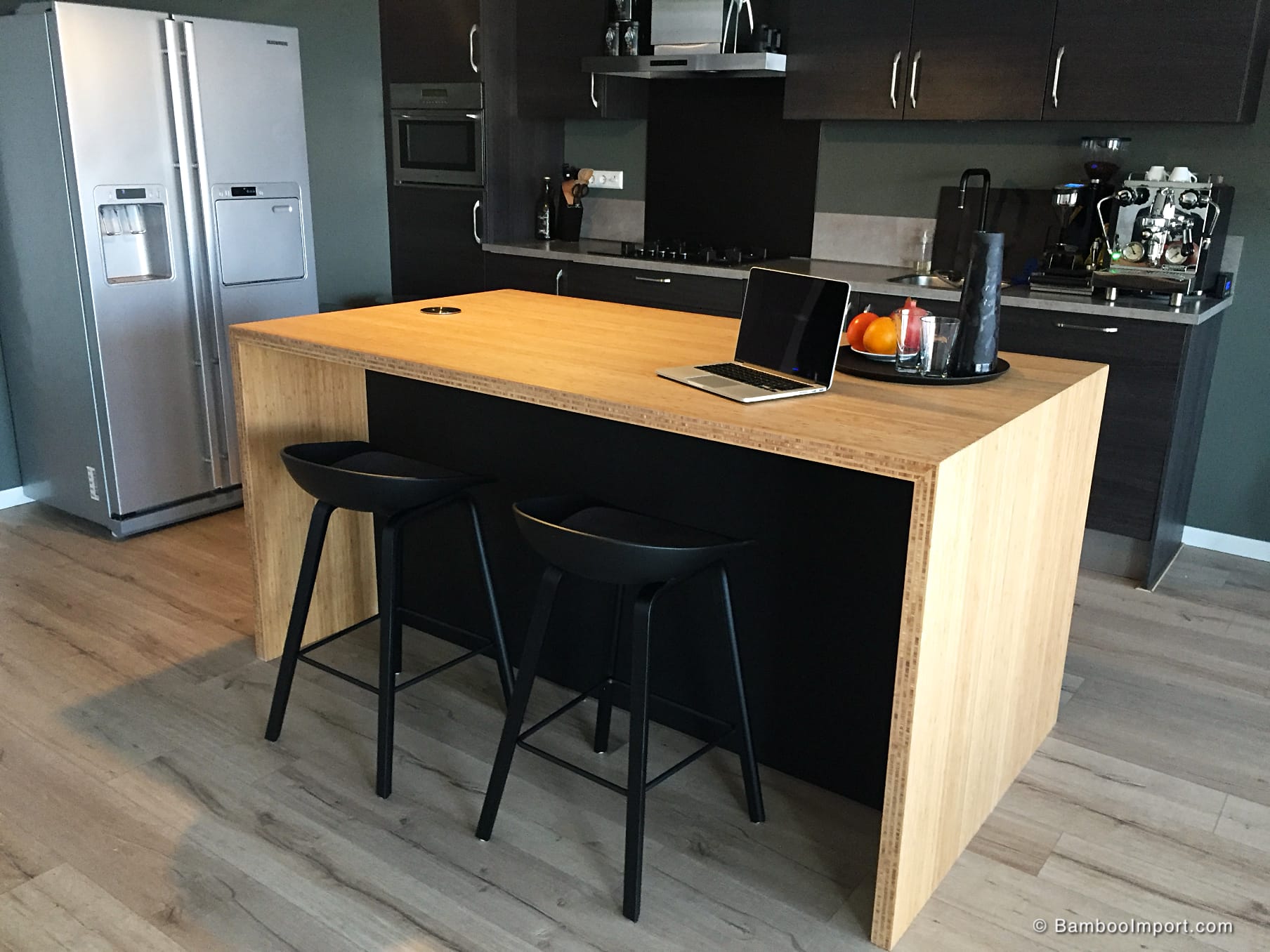 Cooking island · solid top
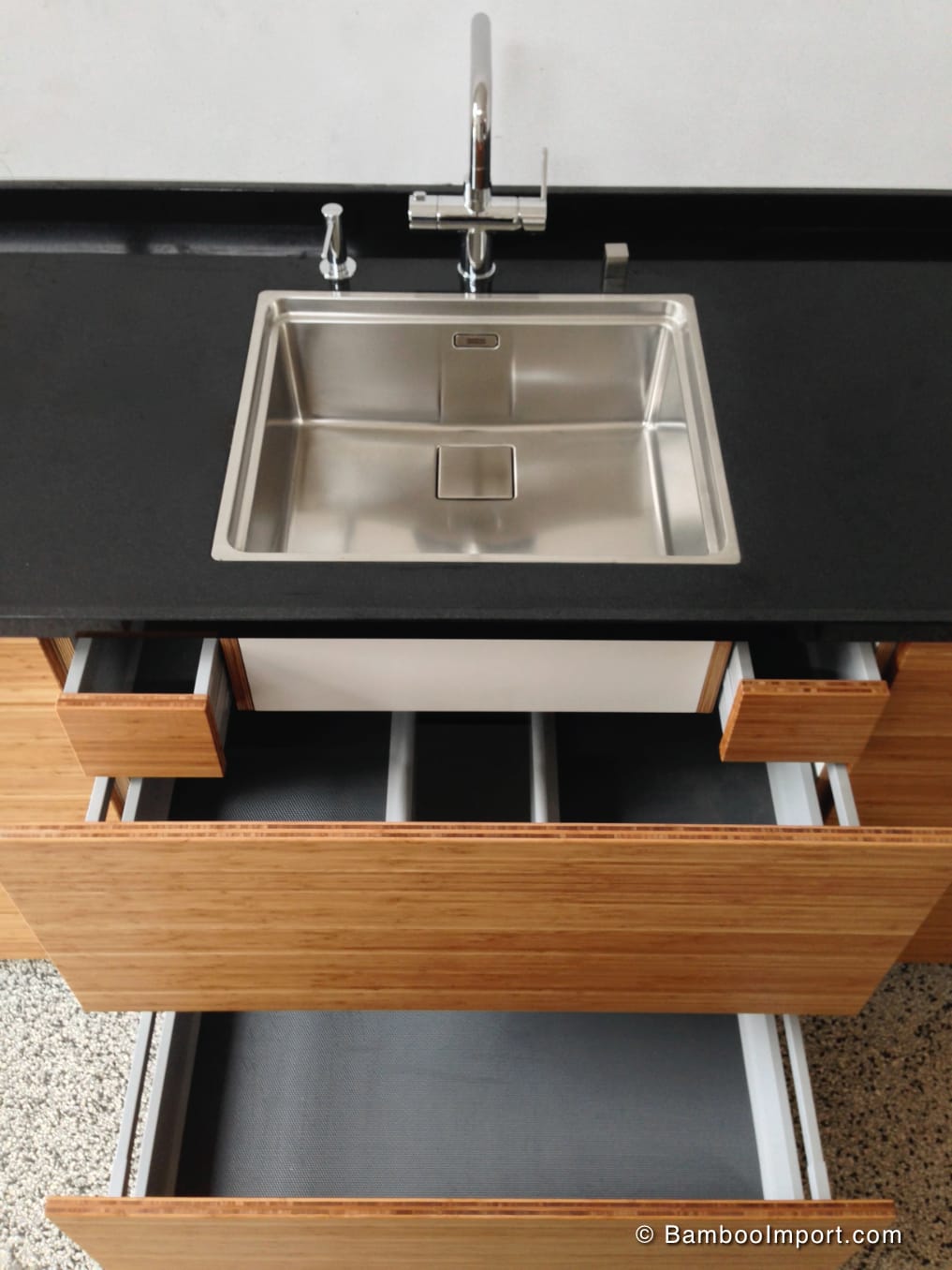 Worktop detail · visible edgeSideboard · solid bamboo
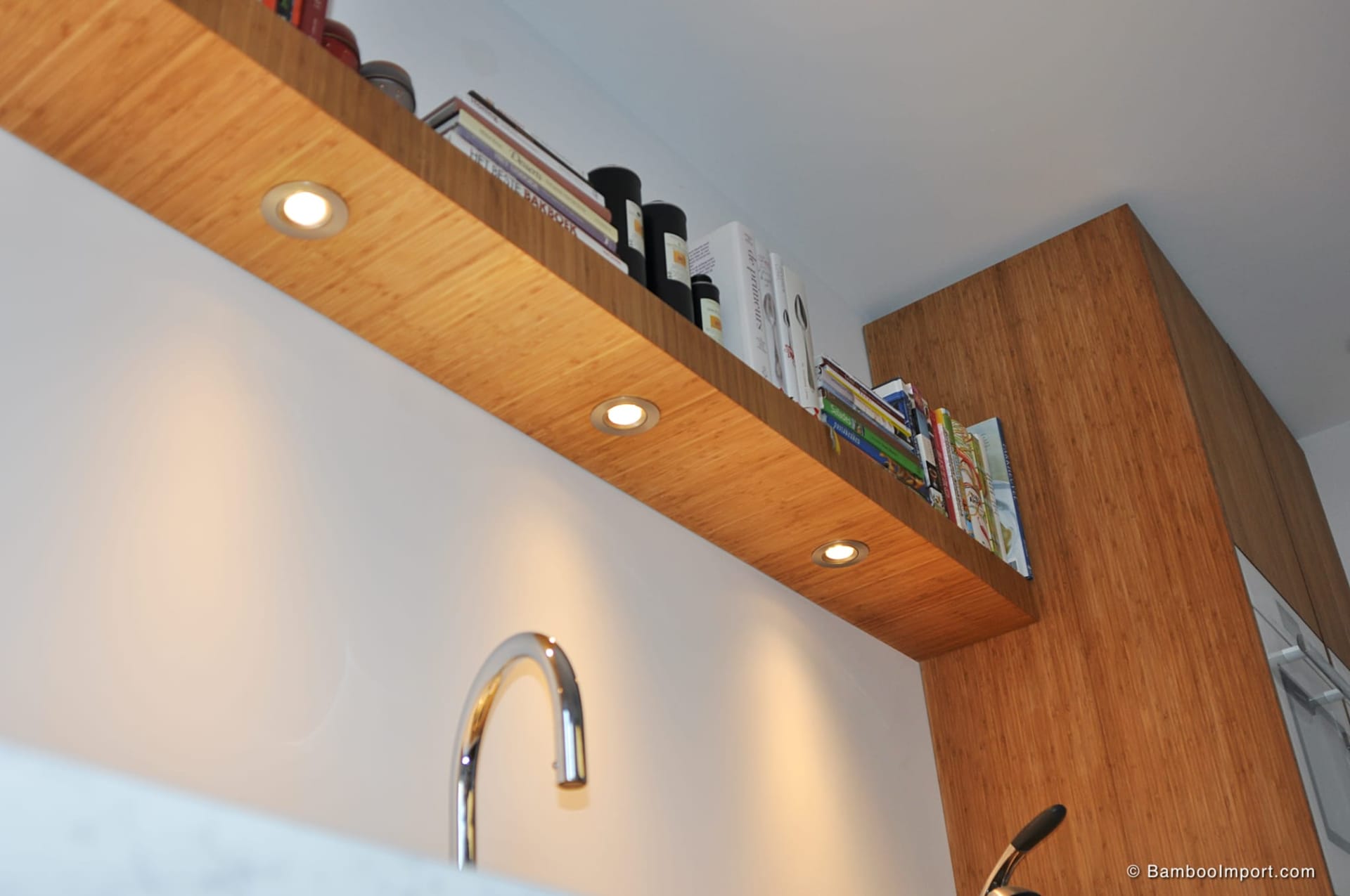 Open cabinet & niche
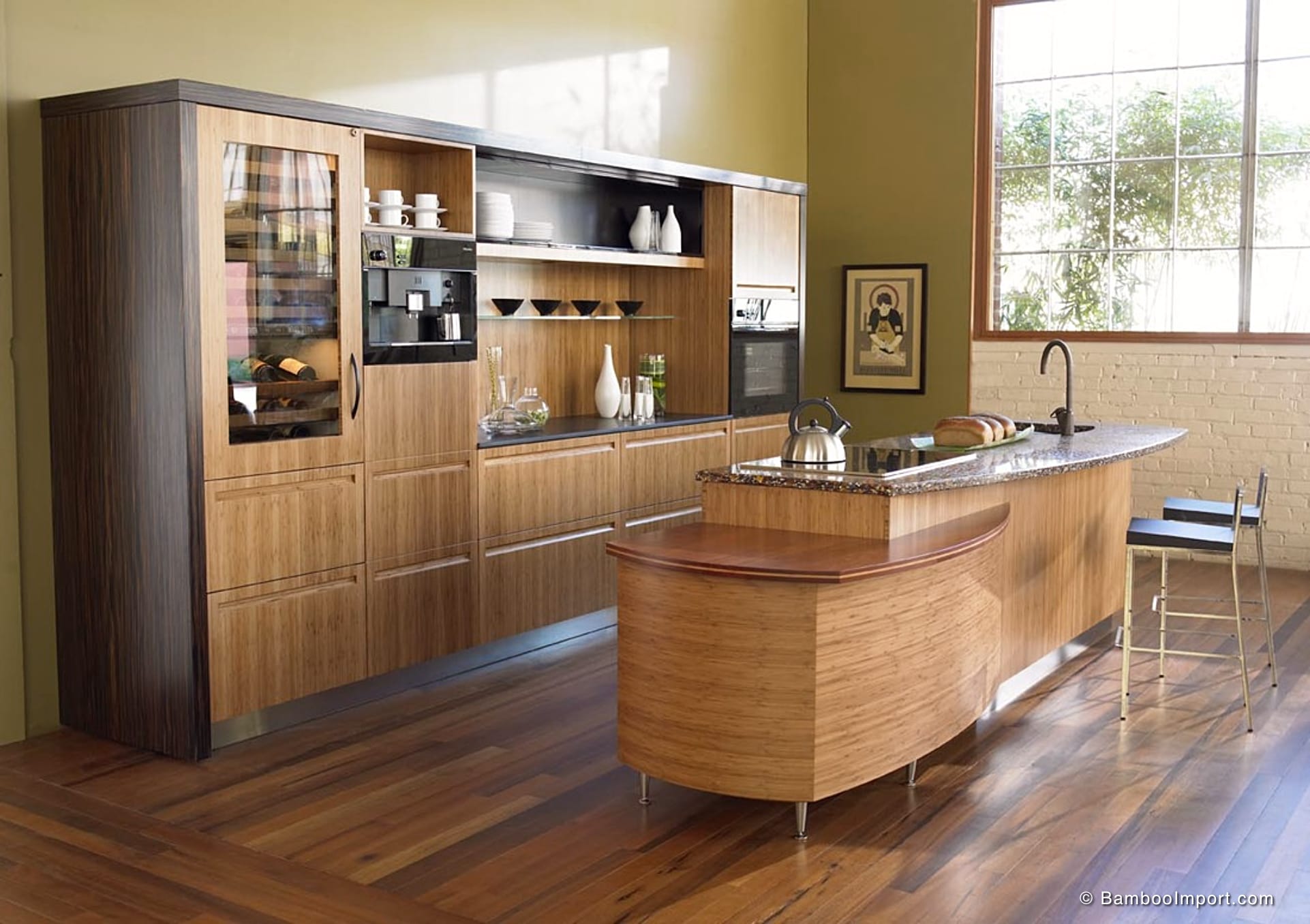 Curved cooking islandBathroom unit · floating washbasin top
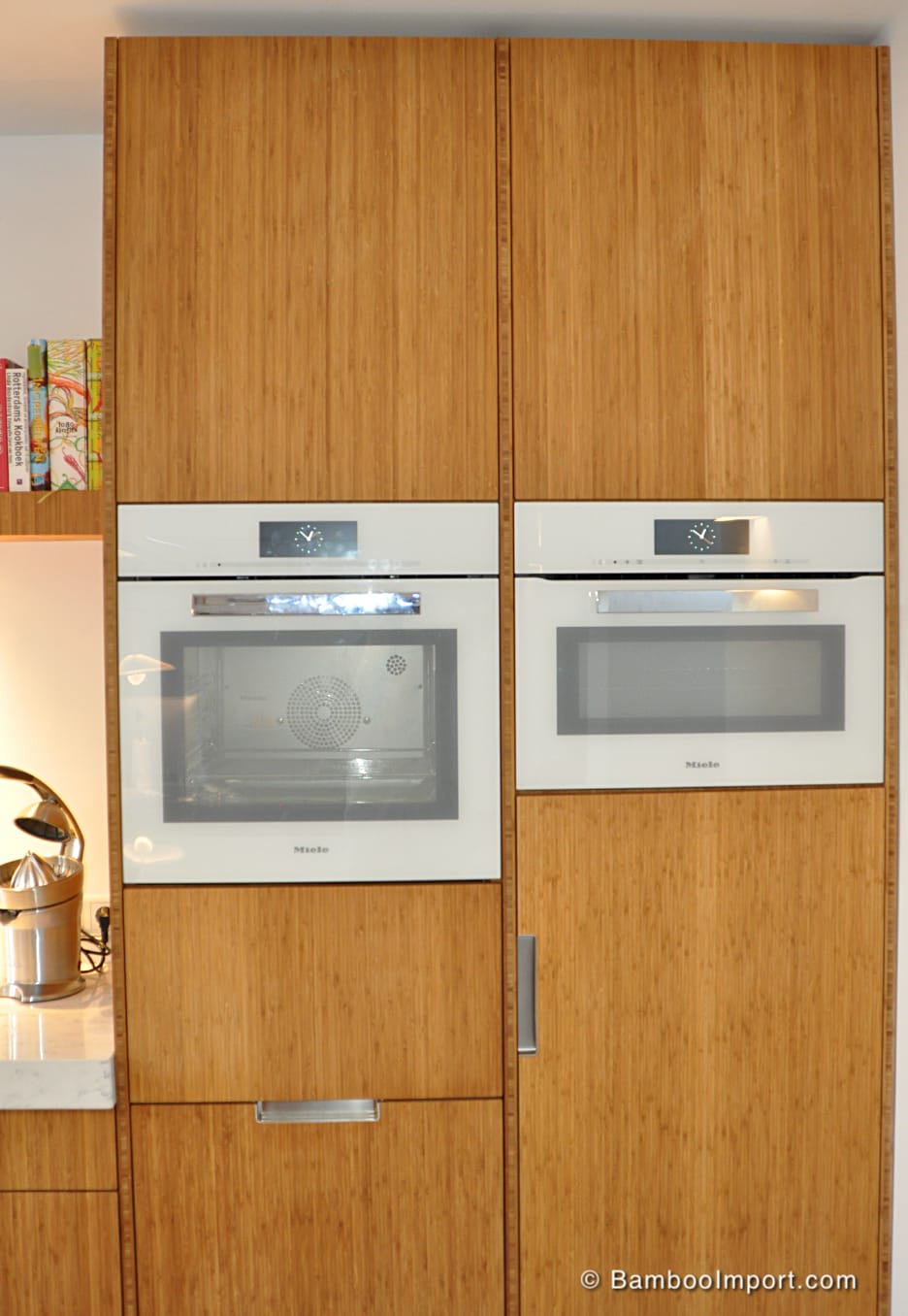 Built-in column
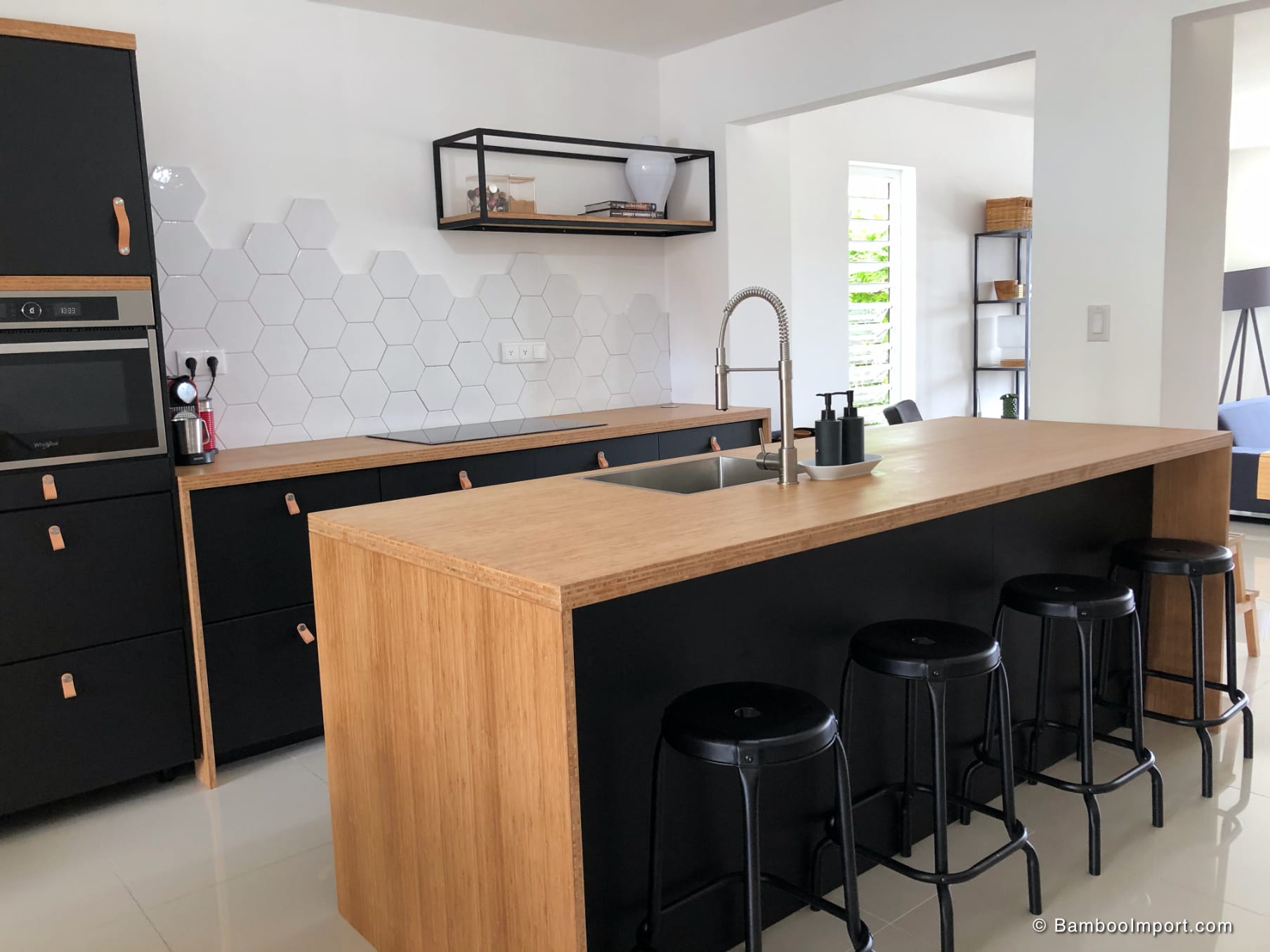 Bar & seatingWall cladding & coffee table
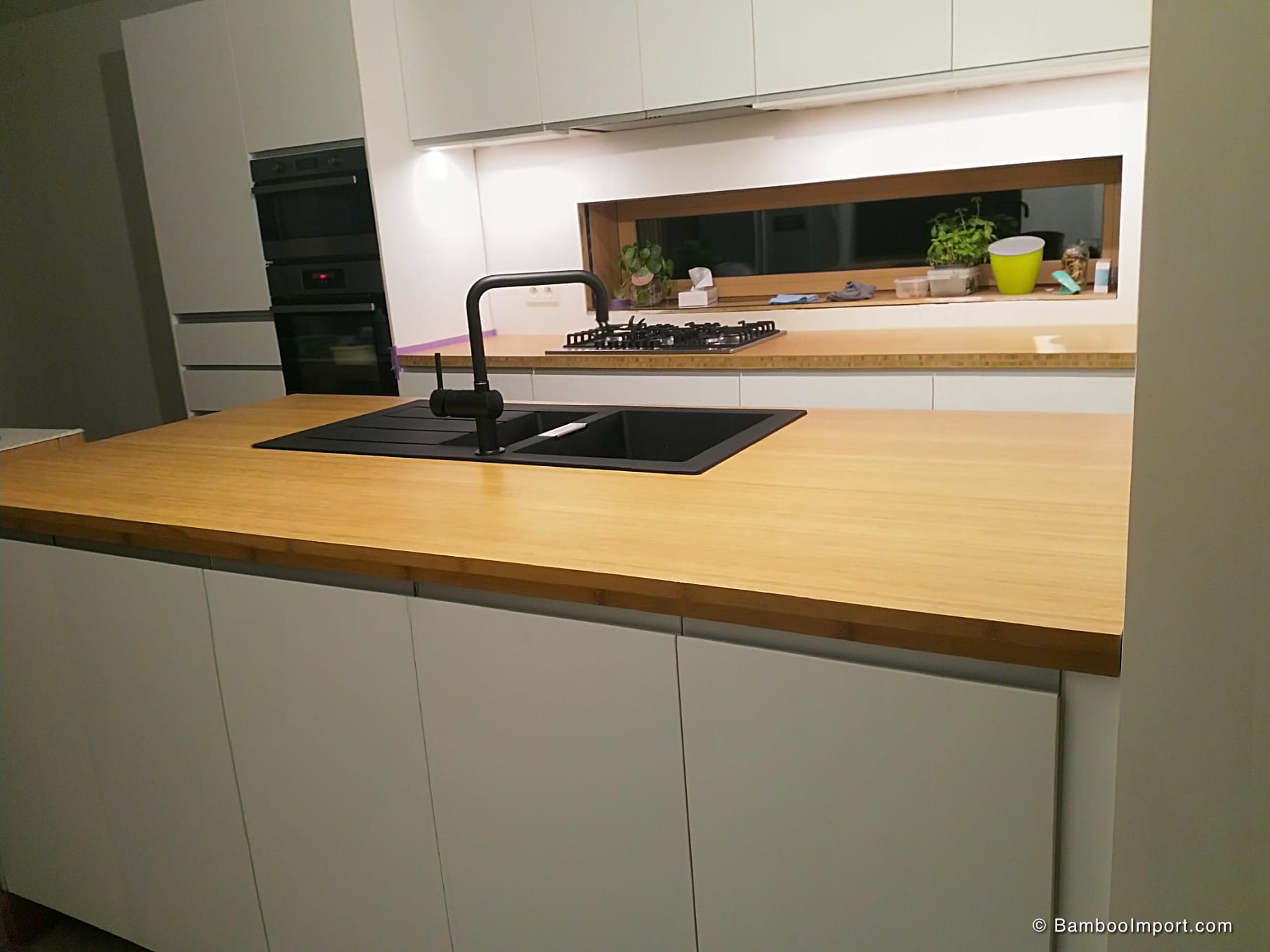 Kitchen worktop
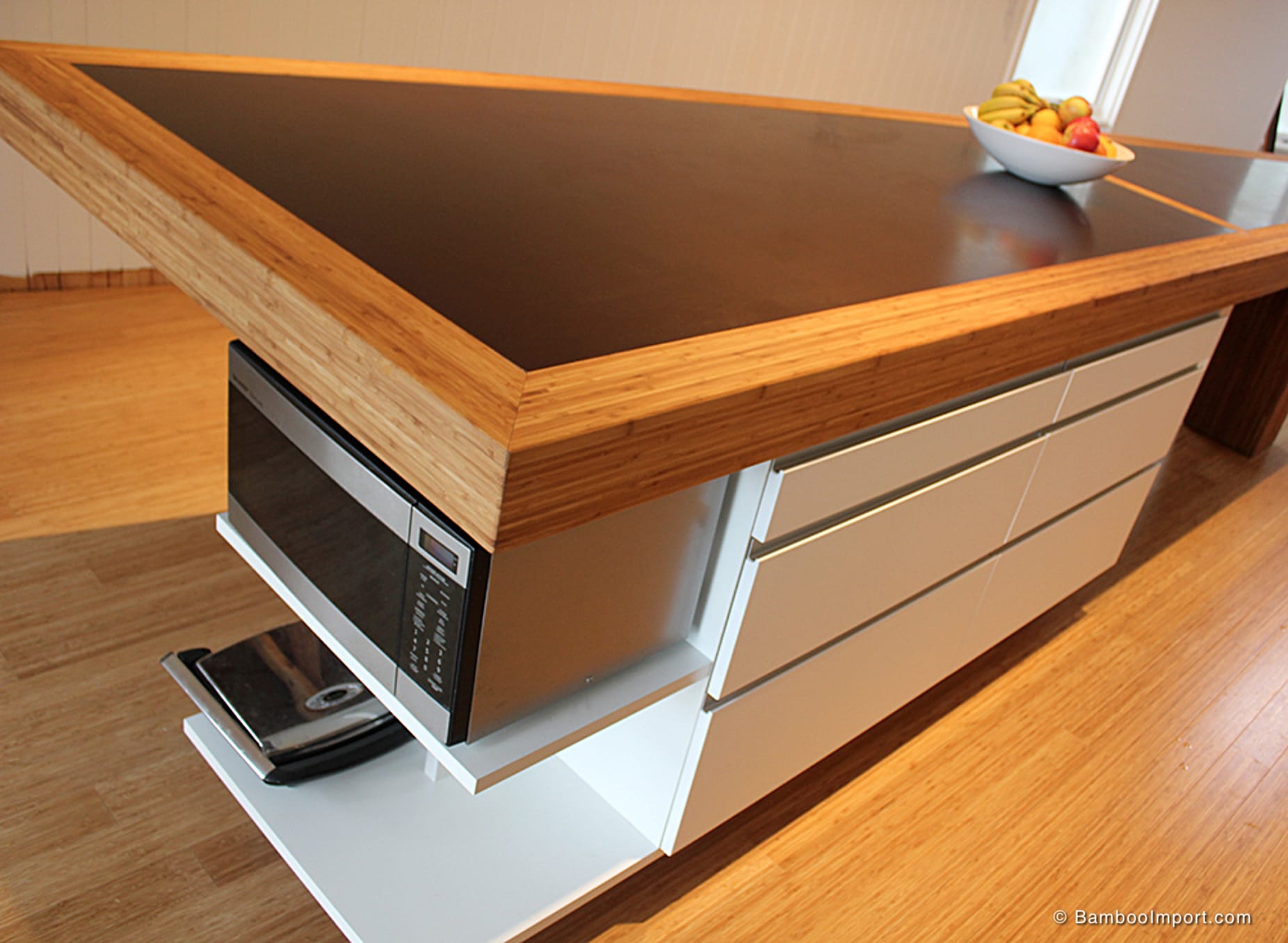 Solid top · edge finishing
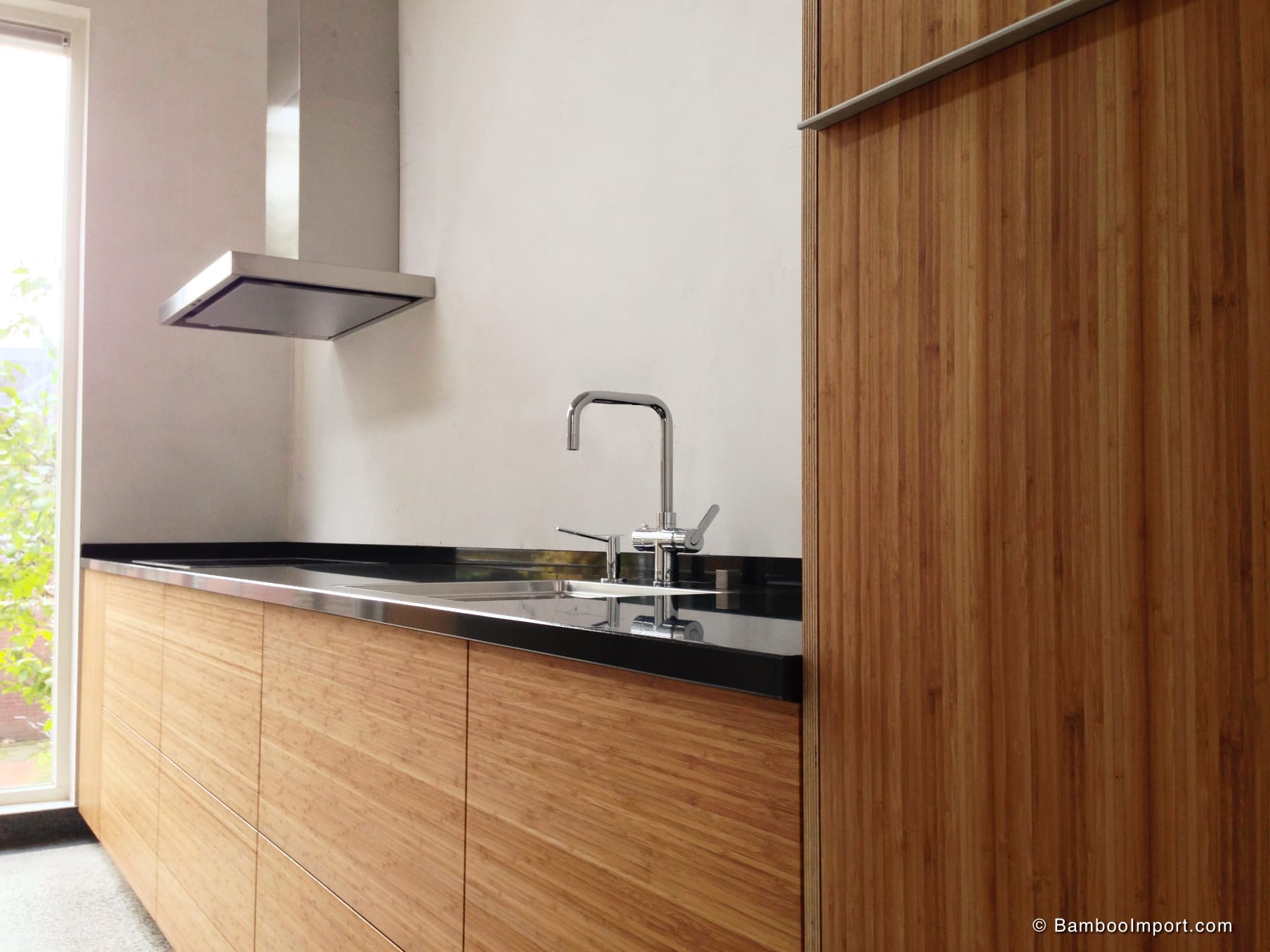 Complete kitchen layout
According to the relevant EN standards. For the complete EPD + material passport, request our technical sheet.
| Property | Value | Standard |
|---|---|---|
| Density | 650 kg/m³ | — |
| Moisture content | 7 – 10 % | — |
| Hardness | 52 N/mm² | EN 17009:2019 & EN 1534:2020 |
| Slip resistance | USRV 40 | CEN/TS 15676 |
| Reaction to fire | Dfl-s1 | EN 14342 |
| Thermal conductivity | 0.131 W/(m·K) | — |
| Bending strength | 0.3 kN | EN 1533 |
| Cupping / Spring / Bowing | 0.1 % / 0.01 % / 0.01 % | EN 17009:2019 |
| Use class | UC1 | EN 335 |
| Formaldehyde release | E1 (0.124 mg/m³) | EN 717-1 |
| TVOC | 7.0 µg/m³ | EN 16516:2018 |
| Heavy metal (Pb / Cd) | < 0.001 % / < 0.001 % | — |
| PCP | < 0.5 mg/kg | — |
Our products are delivered either directly from the manufacturer or from our stock in Europe — shorter lead times for projects across Europe.
Request samples, or discuss your project directly with our technical specialist — response within 2 working days.